By Dusty Hollinger
CFRA Member
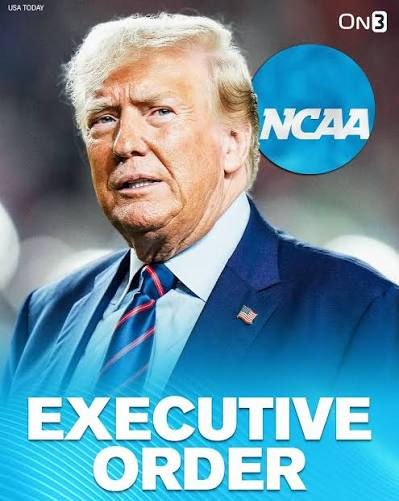
Recently, at the encouragement of Nick Saban, the President signed an executive order restoring transfer eligibility to one transfer for undergraduate student-athletes and one additional transfer for graduate students. The order will take effect on August 1.
Many have welcomed this development because the transfer portal has produced numerous examples of players attending seven schools in eight years. The primary argument in favor of unlimited transfers is that coaches are free to change jobs whenever they choose. While that is true, unless you’re talking about position coaches, how many head coaches have made seven stops in seven years?
The Advantages
Returning to the previous transfer criteria will, in all likelihood, significantly reduce roster poaching. Furthermore, coaches should no longer feel forced to “re-recruit” their own players every offseason. Roster poaching became such a concern that some programs even canceled their spring games out of fear that opposing coaches would use them to recruit away players.
The Disadvantages
Athletic scholarships are typically awarded on a one-year basis, whether they are partial scholarships or full rides. For many players, that reality has been an unfortunate reminder of how uncertain college athletics can be.
Whenever a new head coach arrives, the situation can resemble a new alpha lion taking over a pride—eliminating the previous leader’s offspring to make room for his own. Likewise, a new coach often replaces players who do not fit his system with athletes better suited to his vision. As a result, some players find themselves displaced through no fault of their own.
The Traditional Contingency Plan
Junior colleges have long served as a short-term solution for players figuring out their next move. They offer valuable opportunities for additional playing time, academic credits, and even career training. With proper planning, a player can continue developing both athletically and academically while preparing for the next step.
The Ills—and Solutions—of the Traditional Transfer System
In 2006, Mitch Mustain was the nation’s No. 1 high school quarterback. He followed his high school coach, Gus Malzahn, to Arkansas after Malzahn became the Razorbacks’ offensive coordinator. Mustain likely envisioned playing in the wide-open passing offense that Malzahn had run in high school.
Instead, during the 2006 season, Arkansas head coach Houston Nutt and Malzahn disagreed over the team’s offensive philosophy. Nutt wanted to return to an I-formation offense built around running backs Darren McFadden and Felix Jones, along with fullback Peyton Hillis. All three eventually became successful NFL running backs.
Despite an 8-0 start, Mustain’s role steadily diminished. After Arkansas ended the season with three consecutive losses, he transferred to USC. Once again, it appeared to be the perfect landing spot. All he had to do was sit out his transfer year and wait for Mark Sanchez to leave for the NFL.
Unfortunately, the following season, true freshman Matt Barkley won the starting job. Desperate to get on the field, Mustain even tried out at punter, but without success.
Then there is Nate Montana, the son of Joe Montana. His college football journey was almost unheard of at the time. Beginning in 2008, he was a redshirt walk-on at Notre Dame. The following year, he transferred to Pasadena City College before returning to Notre Dame, where he appeared in three games. He then transferred to the University of Montana but failed to win the starting quarterback job. Finally, in 2012, he transferred to West Virginia Wesleyan, where he eventually became the starter.
But wait a minute—that was Nate Montana’s second transfer to a four-year undergraduate institution.
Montana thought outside the box by utilizing the NAIA, the National Association of Intercollegiate Athletics, which operates independently of NCAA transfer rules. According to his LinkedIn profile, he ultimately graduated from the University of Montana, demonstrating that it is possible to pursue both playing time and a college degree through careful academic and athletic planning.
As for Mitch Mustain, he graduated from USC before going on to play Minor League Baseball and Arena Football.
A Possible Solution
The NCAA should consider creating an exemption for players whose head coach leaves or is replaced. While such an exception could potentially be abused, it deserves serious consideration given the circumstances those athletes face.
Returning to the previous transfer criteria would significantly improve college football by reducing roster instability while still preserving reasonable player mobility. For athletes who find themselves caught in the cracks of the new system, viable contingency plans remain available through graduate transfers, junior colleges, and the NAIA.