By Dustin Hollinger
I want to get the negative out of the way so we can focus on the good. The College Football Playoff (CFP) has taken unique bowl destinations and traditions and turned them into little more than speed bumps on the road to a national championship. In the process, it has stripped these historic games of much of their individual value and significance.
Two years ago, when the CFP expanded to 12 teams, these former New Year’s Six bowls embraced the new format with considerable enthusiasm. But are they genuinely excited about their new roles, or are they simply closing their eyes and ears to what is happening to them and thinking happy thoughts?
The situation reminds me of the fall of South Vietnam. After years of fighting, the South Vietnamese government collapsed as North Vietnamese tanks rolled into Saigon and communist flags were raised. In college football, the New Year’s Six bowls appear to be accepting a similar fate, willingly surrendering the traditions and identities that once made them special.
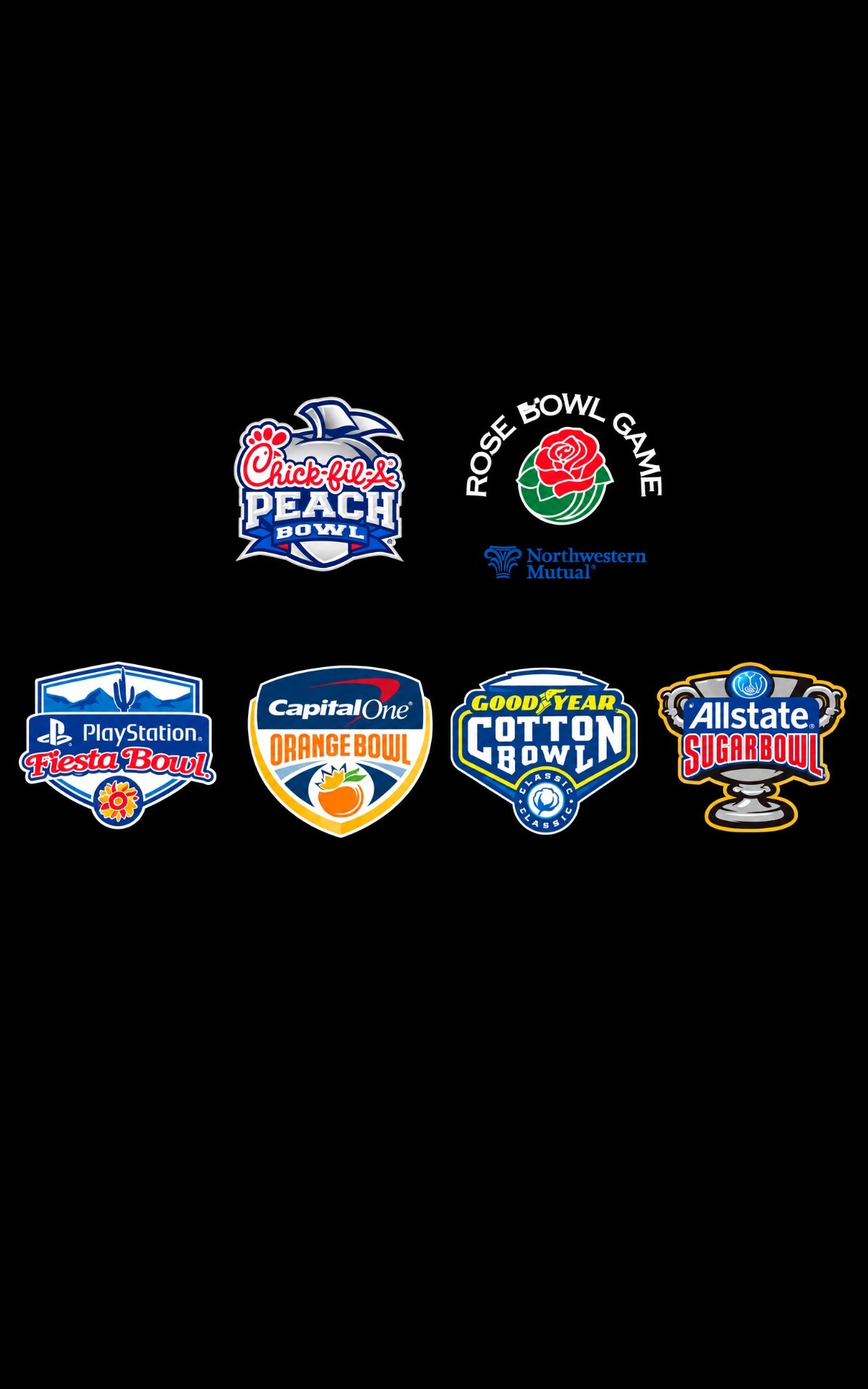
These so-called quarterfinal and semifinal bowls are becoming little more than postseason versions of college basketball’s in-season tournaments. The Rose, Cotton, Orange, Sugar, Peach, and Fiesta Bowls are being reduced to the equivalent of the Maui Invitational, Charleston Classic, State Farm Champions Classic, or other early-season basketball tournaments. They may still carry recognizable names, but their traditional significance is disappearing. This is unacceptable!
Why the New Year’s Six Bowls Matter
I am 100,000 percent convinced that the prestige, pageantry, and traditions of the Rose, Sugar, Cotton, and Orange Bowls helped establish the blueprint for what eventually became the Super Bowl.
The growing concerns about college football losing its traditions, pageantry, and charm are becoming increasingly difficult to ignore. Amid the shameless cash grab by multiple parties, college football is becoming more aligned with college basketball and the NFL. For decades, the New Year’s Day bowl games represented the shining example of what made major college football unique.
These games were not simply stepping stones toward a championship. They were destinations in their own right, carrying decades of history, regional pride, and national prestige. Winning one of these bowls meant something special, regardless of what happened in the national championship race.
It is time to restore that significance.
The Solution
From 2006 through 2013, the BCS National Championship Game was staged separately from the traditional bowl games. The championship was played after the major bowls, with the title game rotating among designated bowl sites.
There is no reason this concept cannot work again.
The New Year’s Six bowl organizations can continue hosting the CFP quarterfinals and semifinals while simultaneously staging their traditional bowl games. Rather than allowing the playoff to consume the entire postseason, college football can preserve both the national championship race and the traditional bowl experience.
How Would It Work Within a 24-Team CFP?
Consider the following 2027 example:
- December 12: First round
- December 19: Second round
- December 26: Quarterfinals
- Early January: Final Four
January 1 and 2 would be reserved exclusively for the traditional New Year’s Six bowl games.
What about getting quality teams to participate in these games? The teams eliminated during the first two rounds of the CFP could be reassigned to the traditional New Year’s Six bowls. This would provide an opportunity for accomplished programs to finish their seasons on a prestigious stage rather than simply disappearing from the postseason after a playoff loss.
Would These Bowls Matter to Teams No Longer Playing for a National Championship?
Absolutely!
What if an undefeated Ohio State, Oregon, Alabama, Georgia, or Notre Dame suffered an early-round upset? Meanwhile, what if the remaining CFP quarterfinalists had three or four losses?
A victory in one of these prestigious bowl games could carry considerable weight with the AP, Coaches, and CFRA polls when determining the national champion. A team that had an otherwise outstanding season should have an opportunity to finish with a meaningful victory and potentially influence the national championship conversation.
For other programs such as Boise State, North Dakota State, James Madison, BYU, Houston, Minnesota, and Kentucky, an invitation to one of these traditional bowl games would represent an experience of a lifetime.
Playing in the Rose, Sugar, Orange, Cotton, Peach, or Fiesta Bowl offers something that a CFP participation ribbon can never provide: a chance to compete on a historic stage and become part of college football tradition.
What About Opt-Outs?
Opt-outs have become a bigger issue than any of us would like to admit. During the four-team CFP era, there were certainly players who opted out of bowl games. On the other hand, first-round NFL Draft quarterbacks Bo Nix and Bryce Young both played in non-playoff New Year’s Six bowls.
It would be foolish to assume that every elite player will automatically opt out simply because his team is no longer competing for a national championship. The prestige of these games, combined with the opportunity to showcase individual talent, could provide plenty of motivation to participate.
Player Benefits
For every player who opts out, there will likely be several others eager to use this national stage to make a statement.
These games would be particularly valuable for borderline NFL Draft prospects, underclassmen looking to improve their draft stock, backups preparing for expanded roles, and players who have been sharing playing time but hope to become the featured running back or starting quarterback next season.
A nationally televised New Year’s bowl game provides an opportunity to demonstrate what these players can accomplish when given the spotlight.
Television Benefits
The television networks would be giddy at the opportunity to bid for these games.
The New Year’s Six bowls already have recognizable brands, established audiences, and decades of history. Restoring their traditional identities would create additional premium postseason programming rather than simply adding more playoff games to an increasingly crowded schedule.
There is value in having multiple meaningful postseason destinations, and the television networks would have every reason to embrace that opportunity.
Conclusion
As mentioned earlier, the BCS era successfully demonstrated that the traditional bowl games and a separate national championship game could coexist.
The Rose, Sugar, Cotton, Orange, Peach, and Fiesta Bowls deserve the opportunity to reclaim their identities rather than become interchangeable playoff venues.
College football does not have to choose between an expanded playoff and preserving its traditions. It can have both.
Let’s make it happen. The value of these bowls, the traditions they represent, and the unique character of college football are all at stake.
A few content recommendations before publication
There are four areas I would consider strengthening further:
1. The Super Bowl comparison: This is a compelling opening argument, but I would be careful about stating that the Super Bowl was directly based on the bowl system without historical support. Your comparison of prestige and pageantry is stronger than claiming a direct blueprint.
2. The 24-team playoff format: Your proposed schedule needs a little more explanation. Specifically, a 24-team playoff with two opening rounds, quarterfinals, semifinals, and a championship game requires clarification about how the final four and championship would fit into the schedule.
3. The national championship argument: The suggestion that a team could win a traditional bowl and influence the AP, Coaches, and CFRA polls is interesting. However, you should explain how that would work alongside the CFP’s official national championship designation.
4. The historical significance: I would actually expand this section. The argument that the Rose Bowl is more than just another football game is probably your strongest selling point. The same applies to the Sugar, Orange, Cotton, Peach, and Fiesta Bowls.
My biggest recommendation: Make the central theme that college football can preserve its traditions without sacrificing playoff expansion. That’s a much stronger argument than simply criticizing the current CFP format.