Inspired by the Pro Football Researchers Association’s Hall of Very Good, the CFRA Honor Roll was created in the spring of 2026 by CFRA member Matthew Keddie for the purpose of recognizing the greatest former college football players, coaches, and contributors who are not inducted in the College Football Hall of Fame.
Eligiblity
The criteria for eligibility into the CFRA Honor Roll is as follows:
I. Players
- If players only played and never coached or worked in a contributor role (administration, advisor, etc.) following their careers, then they must be out of college football for a minimum of 25 years. It does not matter if they are actively playing professional football, as that does not impact their candidacy for the CFRA Honor Roll.
- If players went into coaching or into a contributor type role (administration, advisor, etc.), then they must be out of college football for at least 25 years as a player, then an additional one year following the conclusion of their coaching or contributor role.
- Cannot be currently enshrined in the College Football Hall of Fame.
II. Coaches and Contributors
- All coaches and contributors become eligible for the CFRA Honor Roll one year after the conclusion of their college football coaching and/or contributor roles.
- Cannot be currently enshrined in the College Football Hall of Fame.
- No specific number of games coached or winning percentage required.
- Contributors are defined as persons who has made significant and everlasting contributions to the game and/or history of college football whether it be in the form of advisors, administrators, members of the media, founders and/or revolutionaries of the game, etc.
Selection
- Any active CFRA members can nominate up to 10 former players, coaches and/or contributors (in any combination) each spring during the open nomination period.
- Members of the public can also submit names to be considered for CFRA Honor Roll nomination by e-mailing Brad Matthews (bmatthews85@gmail.com) or Matthew Keddie (sluggermatt15@yahoo.com). However, a CFRA member must still adopt or sign off on each nomination before that nominee can be considered for an official candidate for entry into the Honor Roll that is voted on by the entire organization.
- If more than 20 nominees are submitted in a particular year, then CFRA members are asked to rank each candidate based on their accolades, accomplishments, and contributions to the game. Based on this ranking, a list of twenty Honor Roll Finalists will be created.
- Each CFRA member then submits a ballot that includes at least one selection for induction but no more than 15 such selections from the aforementioned list of honor roll finalists. All candidates who appear on 60% of the submitted ballots will then be inducted into the CFRA Honor Roll.
———————————————————————————————————–
Inaugural CFRA Honor Roll Class (2026)
In 2026, nine candidates were selected for induction into the inaugural CFRA Honor Roll class. They are as follows:
Darnell Autry
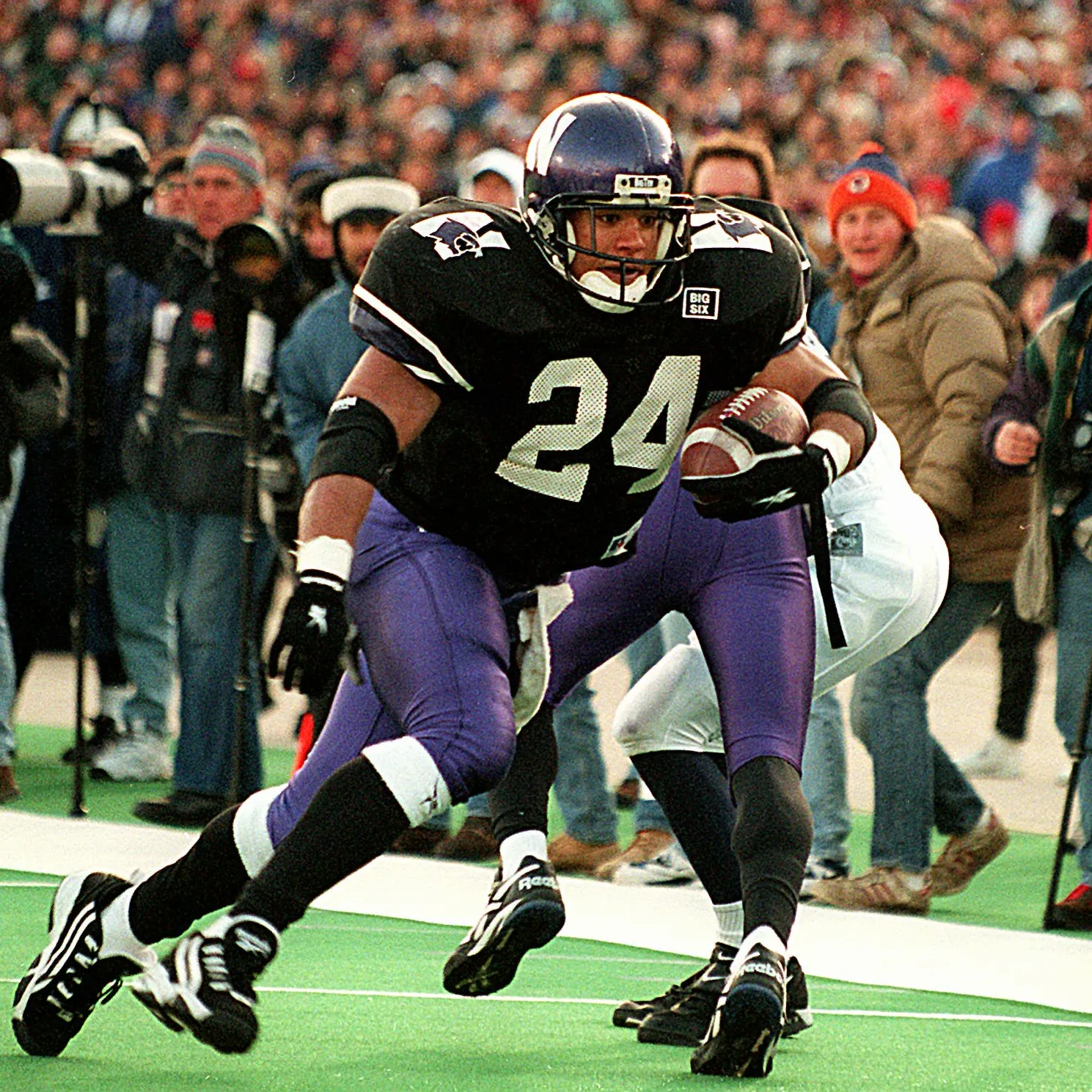
Position: Running back
School: Northwestern, 1994-96
Darnell Autry played a pivotal role in the Northwestern Wildcats’ run to the 1996 Rose Bowl. He led the Big Ten Conference in rushing with 1,785 yards, earning All-Conference honors and second team All-American status. The Wildcats finished a perfect 8-0 in Big Ten Conference games, earning the school’s first outright conference championship since 1936. Autry finished fourth in the Heisman Trophy voting and was featured on the cover of Sports Illustrated. In 1996 as a junior, he averaged 5.2 yards per rush and scored 17 rushing touchdowns, as the Wildcats earned a share of the Big Ten Conference title. For his performance, Autry went on to earn first team All-American honors.
Eric Bieniemy
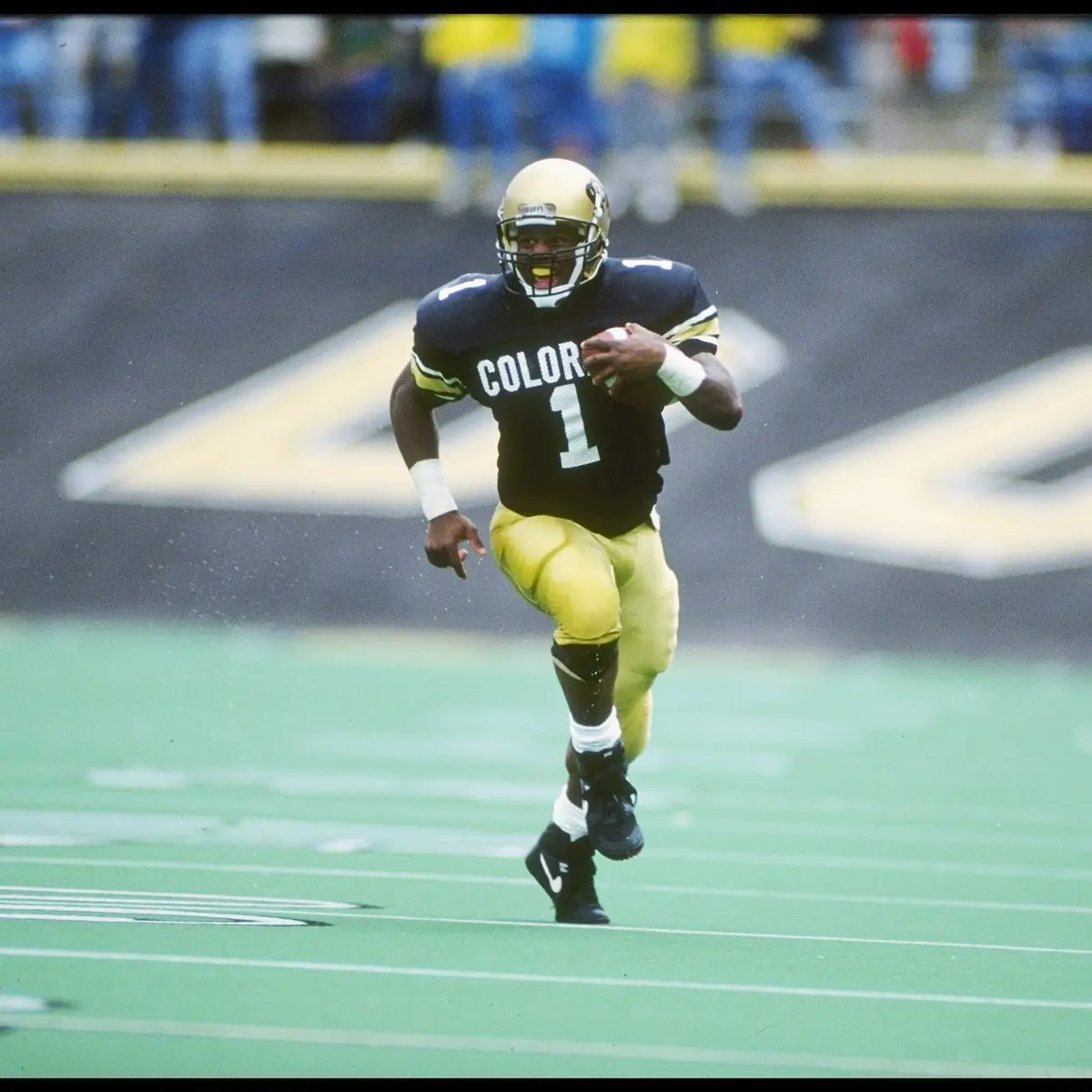
Positions: Running back, Coach
Schools: Player- Colorado Buffaloes (1987-90, 2001-02, 2011-12); Coach- UCLA Bruins (2003-05, 2024)
Eric Bieniemy was arguably the greatest running back in school history at the University of Colorado. He broke through as a sophomore, earning All-Big Eight Conference honors, while rushing for 1,219 yards and 10 touchdowns. Two seasons later in 1990, he was the Big Eight Conference Player of the Year, All-Big Eight Conference selection and unanimous All-American on an 11-1-1 team that won the national championship. The 1990 Buffaloes defeated five ranked opponents, including the top ranked Notre Dame Fighting Irish by the narrowest of margins, 10-9, in the Orange Bowl. Bieniemy finished third in the Heisman Trophy voting, finishing his career as Colorado’s all-time leading rusher with 3,940 yards, 42 rushing touchdowns and all-purpose yards (4,351). In 2011, he was inducted into the University of Colorado Athletics Hall of Fame. Bieniemy returned to Colorado twice to serve as an assistant coach in 2001 and 2011. He also worked as an assistant coach for the UCLA Bruins in 2003-05 and in 2024.
Norm Chow
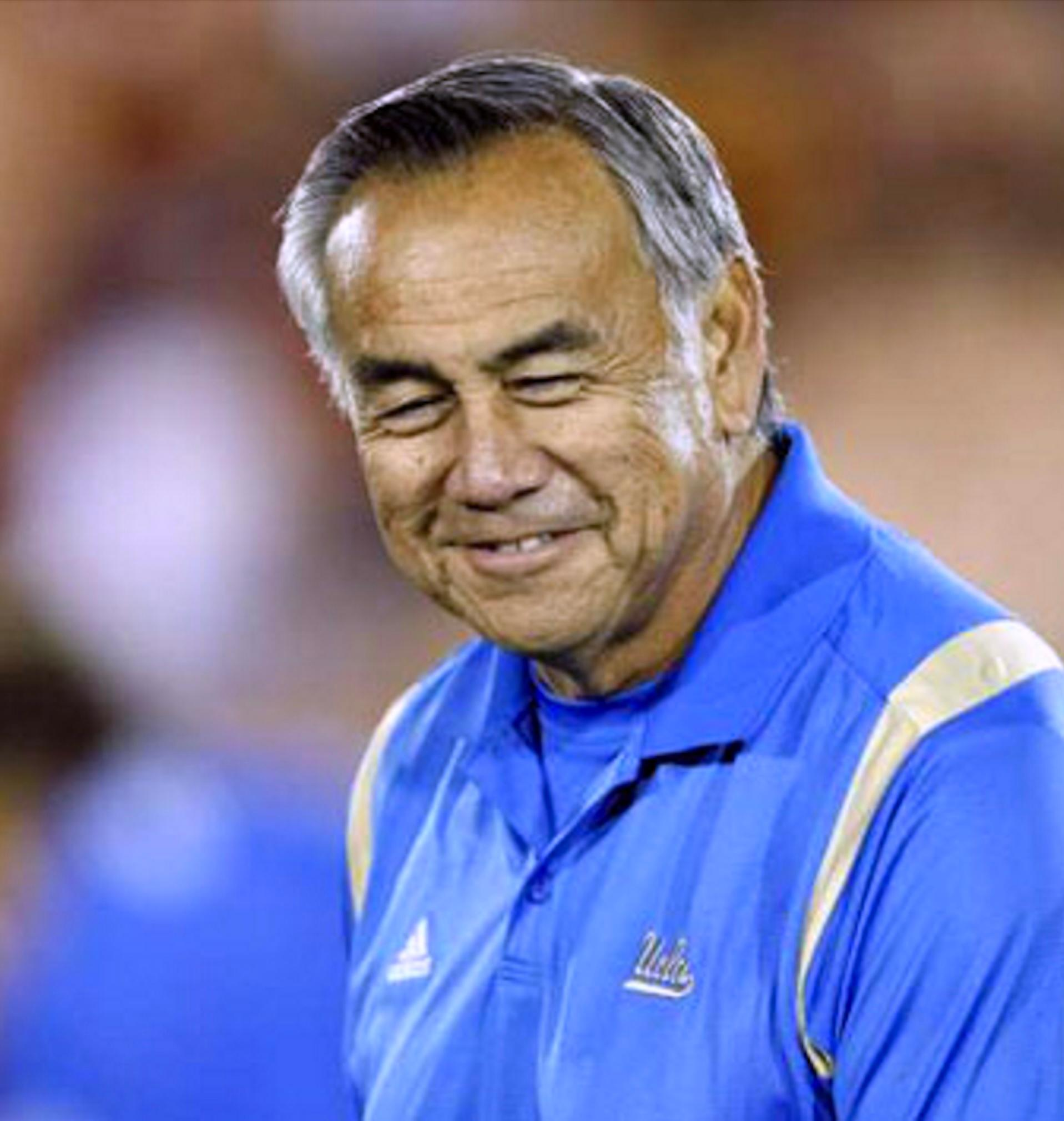
Positions: Guard, Coach
Schools: Utah Utes (player: 1965-67, coach: 2011), Brigham Young Cougars (1973-99), North Carolina State Wolfpack (2000), University of Southern California (2001-04), UCLA Bruins (2008-10), Hawai’i Rainbow Warriors (2012-15)
Norm Chow may be one of the most underrated cultivators of talent. Chow was a three-time Assistant Coach of the Year for his prolific offenses at multiple institutions that included the University of Southern California, Brigham Young University and the University of Utah. Three of his quarterbacks went on to win the Heisman Trophy (Carson Palmer, Matt Leinart, Ty Detmer) and he coached six quarterbacks who were selected in the first round of the NFL Draft. Chow’s offenses were largely responsible for three national titles at BYU (1987) and back-to-back at USC (2003-04). He spent over 26 years at BYU where the Cougars won 244 games during that span, appeared in 23 bowl games and 21 offensive players earned All-American honors. Chow was the recipient of the Frank Broyles Award in 2002 as the nation’s top assistant coach. Later in his career, he served as the head coach at the University of Hawai’i from 2012-15, but his teams never won more than four games in a season. Chow played guard at the University of Utah where he started for three seasons and earned first-team All-Western Athletic Conference honors. For his performance, he was named to Utah’s All-Century Team at offensive guard.
Mike Leach
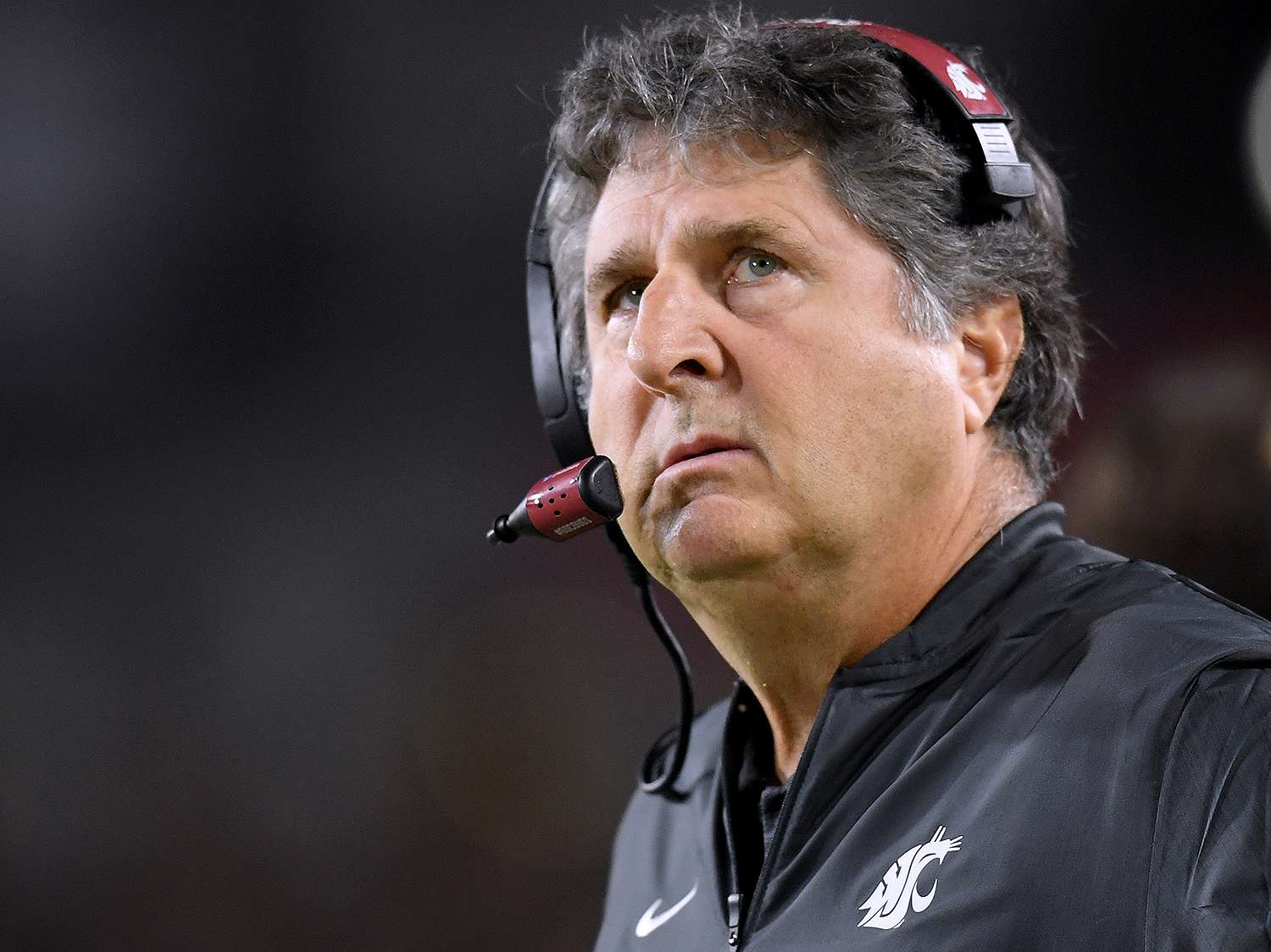
Position: Coach
Schools: Cal Poly (1987), Iowa Wesleyan (1989-91), Valdosta State (1992-96), Kentucky (1997-98), Oklahoma (1999), Texas Tech (2000-09), Washington State (2012-19), Mississippi State (2020-22)
Mike Leach may be one of the most influential offensive innovators in modern college football. Leach pioneered the Air Raid offense at Texas Tech, where his prolific passing attacks helped transform the program into a perennial Big 12 contender. During his ten seasons in Lubbock, the Red Raiders went 84-43, appeared in nine bowl games and produced four consecutive seasons of at least eight wins from 2006-09. In 2008, Leach led Texas Tech to an 11-2 record and its first top-10 finish in school history, earning Big 12 Coach of the Year honors after the Red Raiders reached No. 2 in the national rankings. Leach later revived Washington State, leading the Cougars to five consecutive bowl appearances from 2015-19 and an 11-2 record in 2018, when the team finished No. 10 in the final AP poll. His Washington State teams became synonymous with prolific passing, while quarterbacks such as Kliff Kingsbury, Graham Harrell, Gardner Minshew and Anthony Gordon helped demonstrate the effectiveness of his system. Leach finished his career with a 158-107 record in 21 seasons as a head coach at Texas Tech, Washington State and Mississippi State, along with 17 bowl appearances. He was a two-time Pac-12 Coach of the Year and also earned Big 12 Coach of the Year honors in 2008. Leach’s influence extended far beyond his own teams, as numerous coaches and programs adopted elements of his Air Raid philosophy, making him one of the most important offensive figures of his generation.
Lawyer Milloy
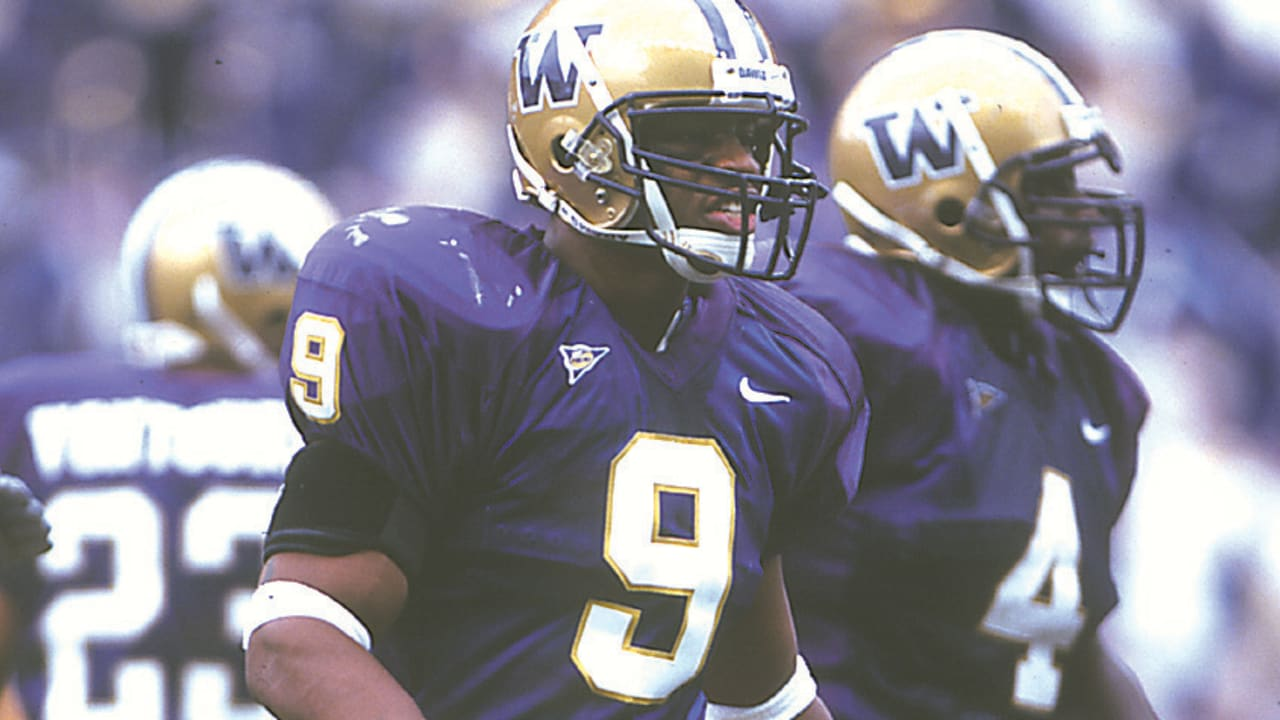
Position: Defensive Back
School: Washington Huskies (1992-95)
Lawyer Milloy was an extremely versatile athlete. At the University of Washington, he was the only sophomore to earn All-Pacific 10 Conference honors at defensive back in 1994. He finished the season with 106 total tackles, which paced the Huskies. Milloy was the first defensive back in school history to lead the team in tackles in over two decades. He repeated that feat in 1995, leading the team with 115 total tackles, earning him unanimous, first-team All-American honors and first-team All-Pacific 10 Conference honors. Concurrently, he starred on the Huskies baseball team and was drafted by Major League Baseball’s Cleveland Indians, then later in 1995 by the Detroit Tigers. For his two-sport athleticism, he was the recipient of the Jim Thorpe award in 1995.
Tim Murphy
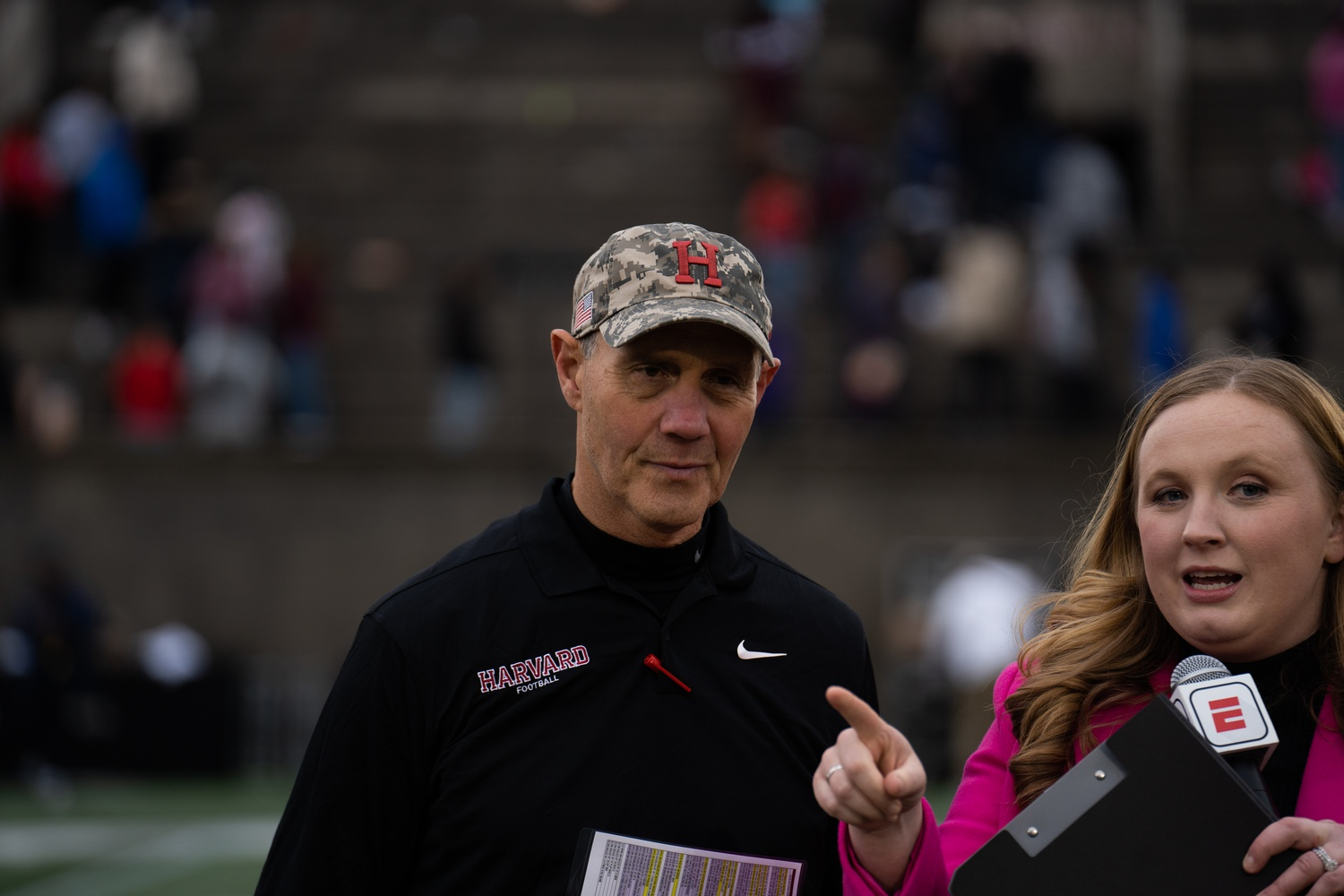
Positions: Linebacker, Coach
Schools: Player- Springfield Pride (1974-77); Coach- Brown Bears (1979-80), Lafayette Leopards (1981), Boston Terriers (1982-84), Maine Black Bears (1985-88), Cincinnati Bearcats (1989-93), Harvard Crimson (1994-2023)
Tim Murphy achieved perfection not just once, but twice, during his 30 year tenure as head coach of the Harvard Crimson. His Crimson teams posted perfect 10-0 records during the 2004 and 2014 seasons. At Harvard, he won 10 Ivy League titles and 200 games, feats that included 16 consecutive winning seasons (2001-16). Upon his retirement from the school, athletic director Erin McDermott said, “Harvard has 150 years of football history and Tim Murphy led the most successful era of its entirety in his 30 seasons.” Murphy also served as the head coach at the University of Maine (1987-88) and at the University of Cincinnati (1989-93). His Maine Black Bears won the 1987 Yankee Conference championship, earning a berth in the NCAA I-AA playoffs. Murphy’s career coaching record was 232-134-1. As of 2026, he still ranks in the Top 50 all-time in career wins in college football history.
Simeon Rice
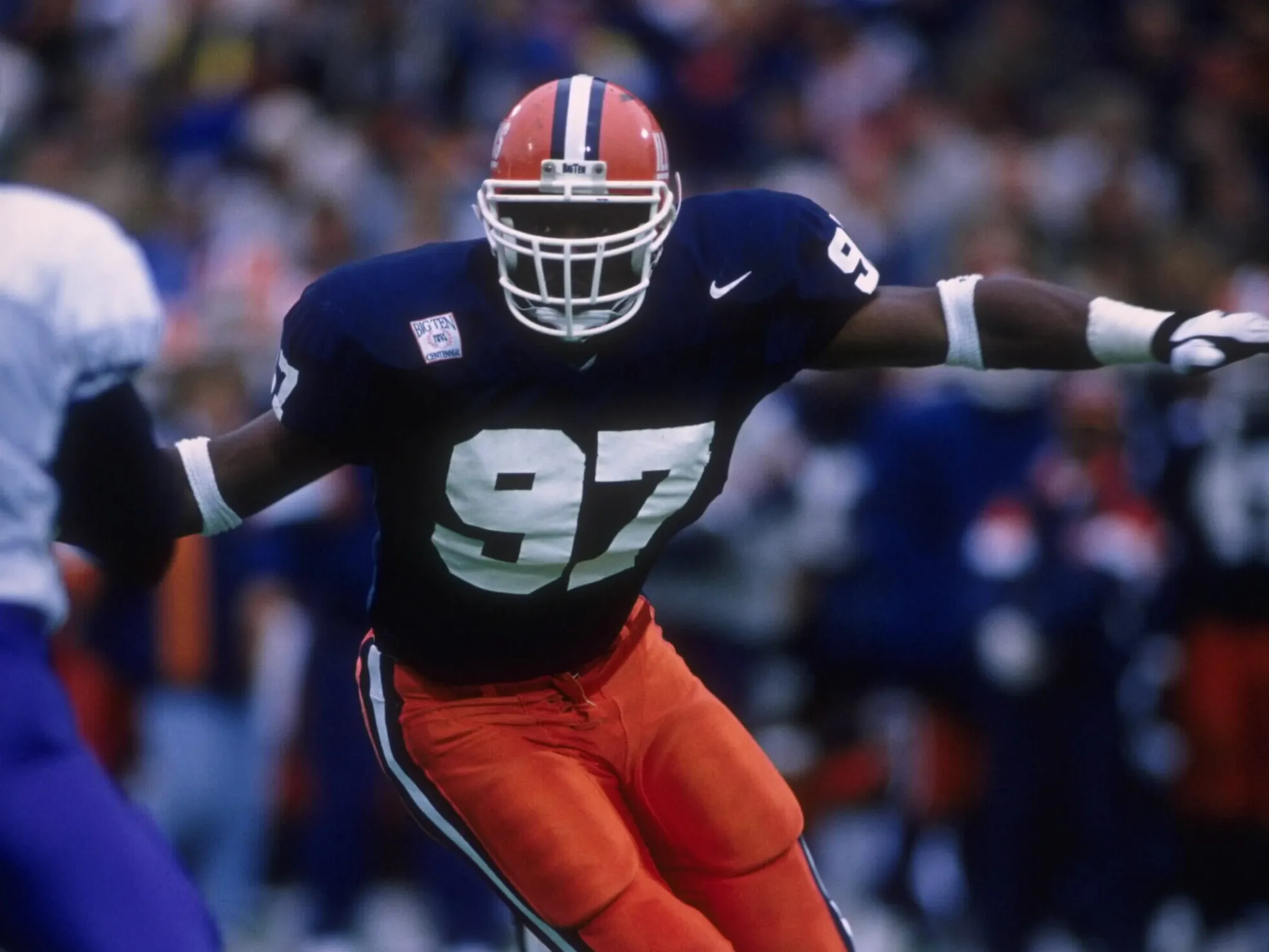
Position: Defensive end
School: Illinois Fighting Illini (1992-95)
Simeon Rice was nearly an unstoppable force along the defensive line at the University of Illinois. He made an immediate impact as a freshman, recording three sacks in his third collegiate contest that saw him earn Player of the Game honors. He was named the Big Ten Conference Co-Freshman of the Year after recording nine sacks on the season. Rice teamed with future NFL players in linebackers Dana Howard and Kevin Hardy on a formidable Illinois defense. As a junior, he tallied 16 sacks, setting a school record, en route to his second of three first-team All-Big Ten Conference honors, and his first of two first-team All-American selections. Arguably the greatest game of his collegiate career in the season opener against Washington State University, he recorded five sacks, blocked a field goal attempt and recovered a fumble. He was drafted third overall in the 1996 NFL Draft by the Arizona Cardinals, going on to have a successful professional football career.
Mike Van Diest
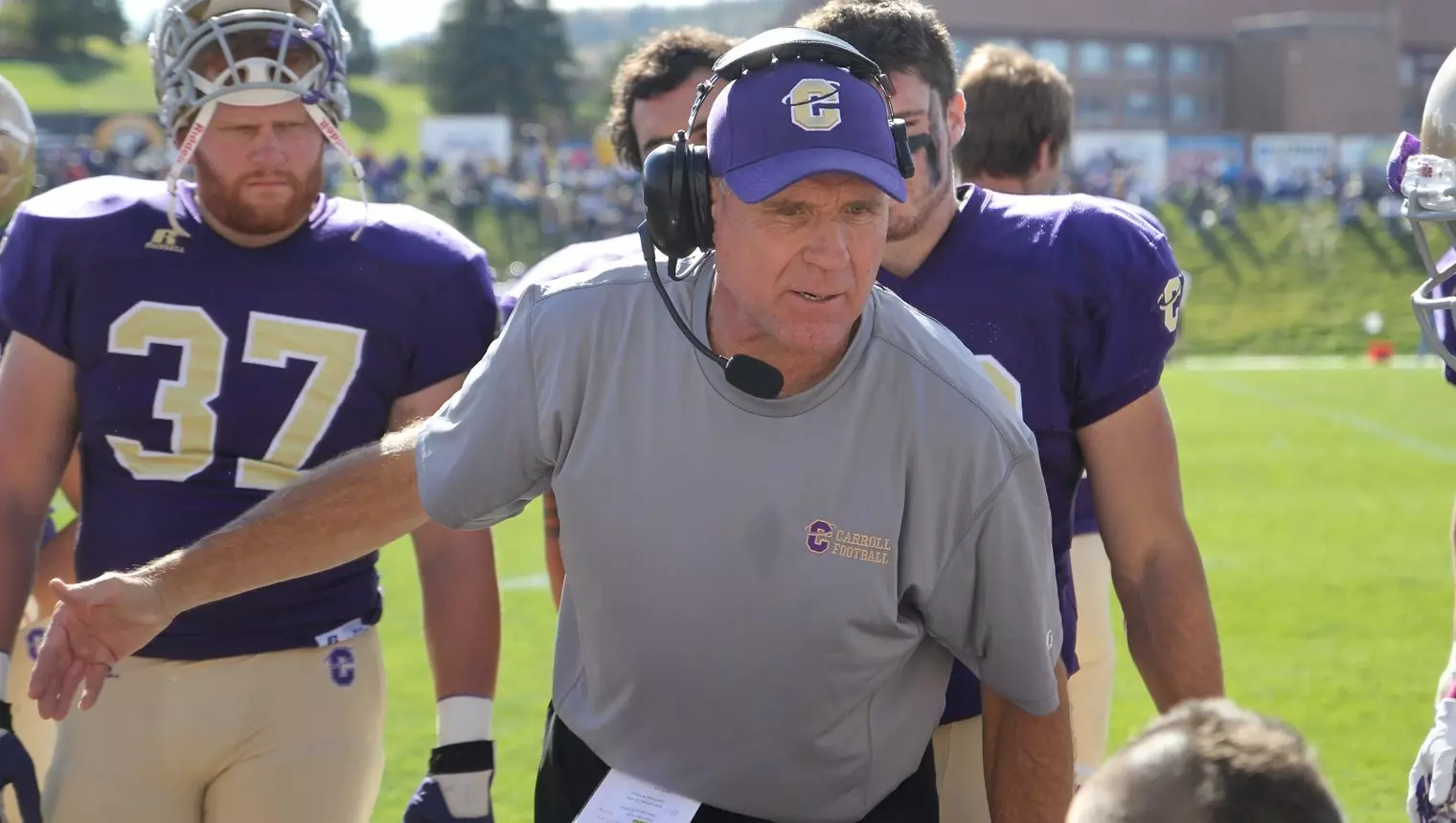
Positions: Guard, Tight end, Coach
Schools: Wyoming Cowboys (Player- 1971-72, 1974; Coach- 1977-79, 1991-98), Montana Grizzlies (1980-85), UMass Minutemen (1986), Northwestern Wildcats (1987-90), Carroll Fighting Saints (1999-2018), Mary Marauders (2020), Montana State Northern Lights (2021)
After a four-year playing career at the University of Wyoming, where he starred as a two-way tight end and guard, Mike Van Diest embarked on a legendary coaching career. He once said, “I love coaching defense, I love coaching linebackers.” Rightfully so, he first spent two decades coaching defense, with stints at his alma mater, the University of Montana, Northwestern University and at the University of Massachusetts. Finally in 1999, he accepted the head coaching position at NAIA Carroll College in nearby Montana. In 20 seasons at the school, he won 203 games, six NAIA national championships (2002-05, 2007, 2010) and 14 Frontier Conference titles (2000-11, 2013-14). Van Diest was also named NAIA Coach of the Year four times (2003, 2005, 2007, 2010). He retired following the 2018 season with a 203-54 record, including 35-8 in the NAIA playoffs and was inducted to the NAIA Hall of Fame in January 2019. As of 2026, he ranks in the Top 100 all-time in head coaching victories in college football history and has a greater career win percentage (.790) than legendary coaches Bo Schembechler (.775), Woody Hayes (.759), Paul “Bear” Bryant (.780), Joe Paterno (.749) and Bobby Bowden (.743).
Kenny Wheaton
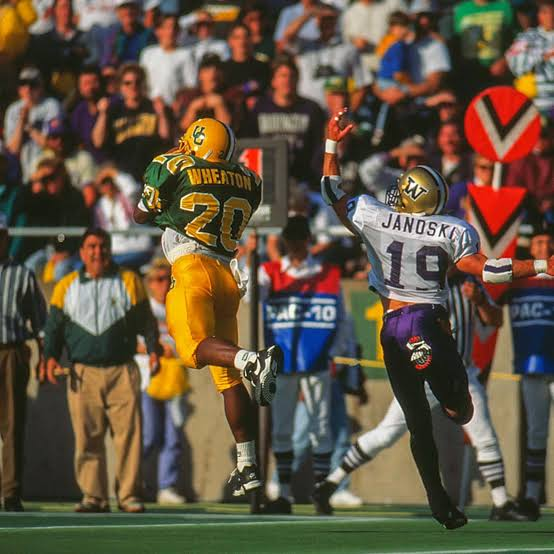
Position: Defensive back
School: Oregon Ducks (1994-96)
Kenny Wheaton was a game changer for the Oregon Ducks. In a 1994 game against the archrival Washington Huskies, who were ranked inside the Top 10 at the time, he intercepted a Damon Huard pass, returned it 97-yards for a touchdown in a moment that become forever known as “The Pick.” The play reversed the course of Oregon football, as the Ducks went on to earn their first Rose Bowl berth in nearly four decades. Wheaton was a two-time second-team All-American selection (1995, 1996) and earned All-Pacific-10 Conference honors in each of his three seasons. He also led the team in interceptions and was the team’s leading tackler (73 total tackles) in 1996. Oregon posted a 24-12 record during his career. The team also earned a trip to the 1996 Cotton Bowl. In 2011, Wheaton was inducted into the University of Oregon Athletics Hall of Fame. He is often regarded as one of the best defensive backs in school history.
Other Finalists Considered for Induction in 2026: Emory Bellard, Rich Brooks, John Cranston, Terry Cullen, Jeb Drenning, Harold “Red” Drew, Alan Gould, Ike Hilliard, George Stewart, Steve Taneyhill, Buddy Teevens
———————————————————————————————————–