By Dustin Hollinger
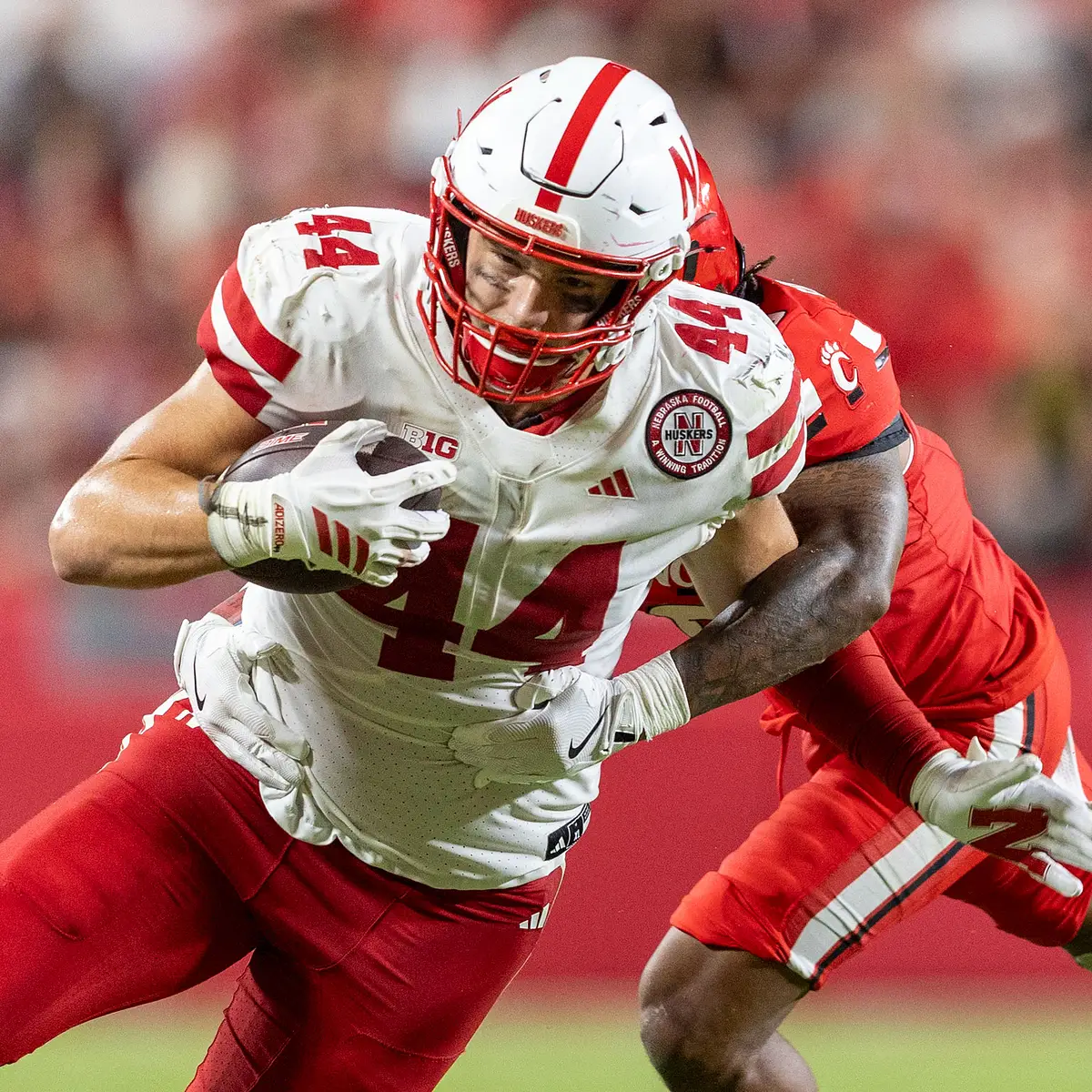
Nebraska’s 1907 Year Book included a description of the team’s quarterback: “The player is required to run fast, to dodge and twist his way through the field.” More than a century later, that description still rings true. Leading into this season, Coach Matt Rhule has emphasized his desire for a mobile quarterback, continuing a tradition that has long been a part of Nebraska football.
I, for one, am very excited about Nebraska’s upcoming season, and I know I’m not alone. Every year since 2018, it seems like, “This will be the year.” But I have gotten used to being suspicious of that feeling. So, in what ways should our historical expectations and current explanations be revised? What’s not to be excited about? The Cornhuskers now have one of the better offensive line coaches in Geep Wade, and Anthony Colandrea looks like the best quarterback since Tommy Armstrong a decade ago.
Thanks to the self-righteous and haughty Athletic Directors Steve Pederson and Shawn Eichorst, there is now a generation of Nebraska fans who cannot comprehend that Nebraska was, for decades, a dominant dynasty. The closest thing to traditional Nebraska success came during the Bo Pelini era (2008–2014), but Shawn Eichorst made sure that ended. He replaced those expectations with the goal of winning six games and making a “Walmart Bowl” appearance.
Starting with Coach Bob Devaney and continuing through Frank Solich, Nebraska’s first goal was to win the conference championship. If the Cornhuskers won a major New Year’s bowl, that victory put them in a strong position to compete for a national championship. That annual goal of winning the conference championship made sense when Nebraska was competing in the Big Eight and Big 12. Now, Nebraska is part of an eighteen-team conference. That traditional goal must be modified.
Tom Osborne proved that making moderate adjustments with the times can lead to sustained success. After Nebraska’s 45–21 loss to eventual national champion Georgia Tech in 1990, it became clear that the defense needed to add more speed. The Cornhuskers subsequently abandoned their longtime 5–2 defense for a 4–3 scheme that emphasized linebacker speed. With this reasonable revision, Nebraska remained true to its famous “Black Shirt” defense while modernizing it.
The result? National championships in 1994, 1995, and 1997.
In Frank Solich’s final season, he also made some adjustments. Former Nebraska defensive and offensive lineman Barney Cotton became Nebraska’s first offensive coordinator since 1969. Until 2003, Head Coaches Tom Osborne and Frank Solich had handled that role themselves. Furthermore, split ends and wingbacks were now known as wide receivers.
During Bo Pelini’s seven seasons, he failed to win a conference championship. However, his two Big 12 Championship Game losses were decided by a combined four points. The 70–21 Big Ten Championship Game loss to 7–5 Wisconsin was inexcusable and made it feel as though Bill Callahan had returned.
Despite that loss, Pelini won 71 percent of his games and took Nebraska to four New Year’s bowl games. Although they were the Gator and Citrus Bowls, they were New Year’s bowls nonetheless.
Pelini did more than simply win games. He returned Nebraska to its smash-mouth running game, including quarterback keepers, while modernizing the offense by integrating those concepts into the shotgun and pistol formations. He also brought back former Tom Osborne and Frank Solich assistants Ron Brown and Barney Cotton. Meanwhile, he added Carl Pelini to help restore the Black Shirt defense.
As mentioned earlier, Nebraska now plays in an eighteen-team conference. That will make winning the conference championship every year a much rarer accomplishment for any team. Modern Nebraska can maintain its Black Shirt defense, power running backs, and quarterback edge runs while still embracing the program’s historic winning tradition.
However, modern Nebraska should not be compared directly to the 40-year period when the program dominated college football. You can thank Steve Pederson for helping put an end to that era.
Instead, modern Nebraska should strive to become what Wisconsin was from 1993 through 2019: a consistently physical offense and defense that wins regularly and is capable of competing for the Big Ten championship every few years.
After the better part of 22 years of being exposed to Steve Pederson, Shawn Eichorst, Bill Callahan, and Mike Riley, going 9–3 and earning a trip to the Citrus Bowl shouldn’t be viewed as a failure. It would be a very good season.
Nebraska fans and boosters need to reevaluate their expectations. If they do not, a potentially good coach could eventually be pushed out, causing Troy Dannen to become the next Steve Pederson or Shawn Eichorst.
The goal should not be to recreate the Nebraska of the 1970s, 1980s, or 1990s overnight. The goal should be to build a modern version of Nebraska that is physical, disciplined, consistently successful, and capable of competing for championships.
That is not lowering the standard.
It is adapting the standard to the modern game.